
Plenary Talks
-
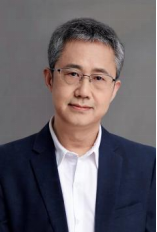
Title:Joint Modulations of Space-Time-Domain Signals in Electromagnetic Space
Speaker: Tie Jun Cui
Affiliation: Affiliation: Southeast University, ChinaAbstract:
Information metamaterials and metasurfaces provide a huge capability to manipulate the spatial beams, wave patterns, polarization states, and frequency spectra independently and simultaneously in real time on a single platform by controlling the digital coding pattern in space and coding sequence in time. This capability makes it possible to manipulate and modulate space-time-domain signals jointly in the electromagnetic space, which further establishes new-architecture radar systems by fusing the information metasurface as phase array for beam control and signal processor for information processing, and anti-radar systems to counteract the radar detection.
Biography:
Tie Jun Cui is the Chief Professor of Southeast University, Nanjing, China, the Director of State Key Laboratory of Millimeter Waves, and the Founding Director of Institute of Electromagnetic Space, Southeast University. His research interests include computational electromagnetics and metamaterials. He proposed the concepts of digital coding and programmable metamaterials and established the new direction of information metamaterials, which can bridge the physical world and digital world, and are easy to integrate with the artificial intelligence. He published over 700+ peer-reviewed journal papers that have been cited by more than 86000 times (H-factor 140), and received many awards, including the National Natural Science Awards of China in 2014 and 2018, the Frontiers of Science Award in the First International Congress of Basic Science in 2023, the IEEE ComSoc Marconi Prize in 2024, the Tan Kah Kee Information Science Award in 2024, the Leading Technology (Natural Science) Award in 2024 World Internet Conference, and the ACES Technical Achievement Award in 2025. Dr. Cui is an Academician of Chinese Academy of Science and IEEE Fellow. Open> -

Title:Bridging Subspace and Manifold Models in Signal and Radar Processing
Speaker: Michael Wakin
Affiliation: Colorado School of MinesAbstract:
In radar and signal processing, changing parameters such as pulse arrival time, carrier frequency, or target position can cause received signals to trace out a nonlinear, low-dimensional manifold in a much higher-dimensional signal space. Such a “manifold hypothesis” helps inspire and explain the success of many machine learning techniques. Meanwhile, many classical signal processing techniques rely on low-dimensional linear subspace models, from lowpass filtering for noise removal to sparse modeling for signal reconstruction. Bridging these two perspectives opens the door to more powerful tools for signal and radar processing. In this talk, we explore the benefits of using subspace models that extend over localized regions of a manifold. In a variety of problem settings involving signals concentrated in time, frequency, or space (such as identifying spatially localized targets), these subspaces can be remarkably effective for capturing signal energy while remaining nearly orthogonal to out-of-band interference. This property enables a range of practical applications, including modeling and reconstruction of multiband signals, antenna metrology, and through-the-wall radar imaging. We survey several such applications and also discuss fast FFT-like algorithms designed to enable fast computations with the resulting subspaces.
Biography:
Michael B. Wakin is a Professor of Electrical Engineering at the Colorado School of Mines. Dr. Wakin received a B.S. in electrical engineering and a B.A. in mathematics in 2000 (summa cum laude), an M.S. in electrical engineering in 2002, and a Ph.D. in electrical engineering in 2007, all from Rice University. He was an NSF Mathematical Sciences Postdoctoral Research Fellow at Caltech from 2006-2007, an Assistant Professor at the University of Michigan from 2007-2008, and a Ben L. Fryrear Associate Professor at Mines from 2015-2017. His research interests include signal and data processing using sparse, low-rank, and manifold-based models. In 2007, Dr. Wakin shared the Hershel M. Rich Invention Award from Rice University for the design of a single-pixel camera based on compressive sensing. In 2008, Dr. Wakin received the DARPA Young Faculty Award for his research in compressive multi-signal processing for environments such as sensor and camera networks. In 2012, Dr. Wakin received the NSF CAREER Award for research into dimensionality reduction techniques for structured data sets. In 2014, Dr. Wakin received the Excellence in Research Award for his research as a junior faculty member at Mines. In 2021, Dr. Wakin was elevated to IEEE Fellow. Dr. Wakin is a recipient of the Best Paper Award and the Signal Processing Magazine Best Paper Award from the IEEE Signal Processing Society. He has served as an Associate Editor for both IEEE Signal Processing Letters and IEEE Transactions on Signal Processing and as a Senior Area Editor for IEEE Transactions on Signal Processing. Open> -
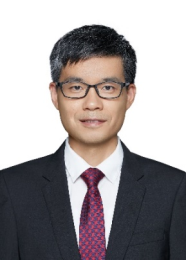
Title:Ground-based Distributed Planetary Radar: Overview, Technologies, and Challenges
Speaker: Zegang Ding
Affiliation: Beijing Institute of TechnologyAbstract:
Ground-based planetary radar has played a vital role in deep space target sensing and communication, and has promoted significant development of planetary science. Traditional monostatic and large-aperture radar systems have made important contributions, but these systems have very high technical complexity and costs. Distributed aperture radar provides a promising alternative solution by coherently combining multiple spatially separated smaller antennas. This approach has higher scalability and deployment flexibility, potentially achieving higher sensitivity and improved resolution. In this talk, the historical development of ground-based planetary radar will be reviewed, and the advantages of ground-based distributed planetary radar will be discussed. Moreover, the latest research advancement in ground-based distributed planetary radar will be presented, and in particular China’s current efforts and achievements are highlighted.
Biography:
Zegang Ding received a B.S. degree in Communication Engineering in 2003 and a Ph.D. degree in Signal and Information Processing in 2008, all from Beijing Institute of Technology. In September 2008, he joined Beijing Institute of Technology as a faculty. Currently, he is a Distinguished Professor at the Beijing Institute of Technology. He is the Deputy Director of Radar Technology Research Institute and the Director of a Key Laboratory of the Ministry of Education. His research interests focus on synthetic aperture radar technologies. He is a Fellow of the Chinese Institute of Electronics. He serves as the Vice Chair of the Radio Astronomy Subsociety of the Chinese Institute of Electronics, and as editorial board members of Modern Radar, Acta Aeronautica et Astronautica Sinica, and Journal of Deep Space Exploration. He has been the General Chair of the IET International Radar Conference 2025, the Technical Program Committee Chair of the IET International Radar Conference 2018, and the Technical Program Committee Vice Chair of the International Conference on Signal, Information and Data Processing 2019. He has been the PI over 20 research projects and grants funded by National Key Research and Development Program of China, National Natural Science Foundation of China, etc. He has published over 60 journal papers and one book, and has over 40 patents granted. Open> -
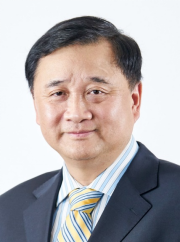
Title:Unlocking New Frontiers in Digital-Array Radar Data Processing
Speaker: LU Yilong
Affiliation: BNanyang Technological UniversityAbstract:
In a modern digital-array radar, the signal chain runs: beamforming based waveform generation → transmitters → antenna array → microwave digital receivers → signal-processing stage → digital beamformer → data-processing layer. While researchers have thoroughly optimized every preceding block, radar-data processing is still relatively under-explored. This talk presents two case studies demonstrating how advanced radar data processing unlocks significant performance gains. By embracing flexible waveform and antenna array designs, and leveraging artificial intelligence, one can achieve capabilities beyond the reach of conventional approaches with novel radar data processing. The first case study examines a highly sparse digital-array radar designed for wide field-of-view, low-cost automotive applications. The second explores a vector digital-array architecture delivering ultra-wideband direction-finding for space-surveillance missions. Composite Multiple Resolution processing techniques are applied in both case studies. High-fidelity simulations will quantify the gains delivered by the new processing chains. Hopefully, this talk may spark fresh ideas for tackling open radar problems.
Biography:
LU Yilong studied or worked at six leading universities across Asia, Europe, and North America, namely, Harbin Institute of Technology, Tsinghua University, UESTC, UCL, UCLA, and Nanyang Technological University (NTU). He taught at NTU for more than three decades, retired with honor in 2023, and remains active in radar research and applications. His research spans radar systems, array-signal processing, and SAR applications, and he has conducted extensive collaborative projects with prominent organizations and companies in Singapore, France, USA, Netherlands, and China. He also rendered distinguished professional service to the global radar community, inter alia as a member of the IEEE Medal and Recognition Committee for the IEEE Dennis J. Picard Medal - the highest honor award for radar technologies and applications - of the IEEE Aerospace and Electronic Systems Society's Fellow Evaluation Panel, the Editorial Board of IET Radar, Sonar & Navigation, and the Advisory Board of the European Union's DBF-SAR project - DIFFERENT. He is an IEEE Life Fellow, an AAIA Fellow, and an AIIA Fellow. Open> -
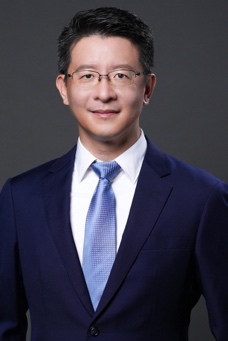
Title:Rydberg Atomic Receiver: Next Frontier of Wireless Communications and Sensing
Speaker: Prof. Kaibin Huang
Affiliation: Dept. of Electrical and Electronic Engineering, The University of Hong Kong (HKU), Hong KongAbstract:
The advancement of Rydberg atoms in quantum information technology is driving a paradigm shift from classical receivers to Rydberg atomic receivers (RARE). RAREs utilize the electron transition phenomenon of highly-excited atoms to interact with electromagnetic (EM) waves, thereby enabling the detection of wireless signals. Operating at the quantum scale, such new receivers have the potential to breakthrough the sensitivity limit of classical receivers, sparking a revolution in wireless communications and sensing. In this talk, I will first introduce the fundamentals of RAREs, covering their definition and properties, the interaction of Rydberg atoms with EM waves, as well as the electromagnetically-induced-transparency based quantum measurement. Then, the pros and cons of of RAREs compared as opposed to classical receivers will be discussed. The second part of this talk will present our latest progress in RARE aided multi-antenna communication and sensing, ranging from transmission model, signal detection, to channel capacity. The talk will be concluded with some promising future directions on integration of RARE into modern wireless communication and radar systems.
Biography:
Kaibin Huang received the B.Eng. and M.Eng. degrees from the National University of Singapore and the Ph.D. degree from The University of Texas at Austin, all in electrical engineering. He is the Philip K H Wong Wilson K L Wong Professor in Electrical Engineering and the Department Head at the Dept. of Electrical and Electronic Engineering, The University of Hong Kong (HKU), Hong Kong. His work was recognized with seven Best Paper awards from the IEEE Communication Society. He is a member of the Engineering Panel of Hong Kong Research Grants Council (RGC) and a RGC Research Fellow (2021 Class). He has served on the editorial boards of five major journals in the area of wireless communications and co-edited ten journal special issues. He has been active in organizing international conferences such as the 2014, 2017, and 2023 editions of IEEE Globecom, a flagship conference in communication. He has been named as a Highly Cited Researcher by Clarivate in the last six years (2019-2024) and an AI 2000 Most Influential Scholar (Top 30 in Internet of Things) in 2023-2024. He was an IEEE Distinguished Lecturer. He is a Fellow of the IEEE and the U.S. National Academy of Inventors. Open> -
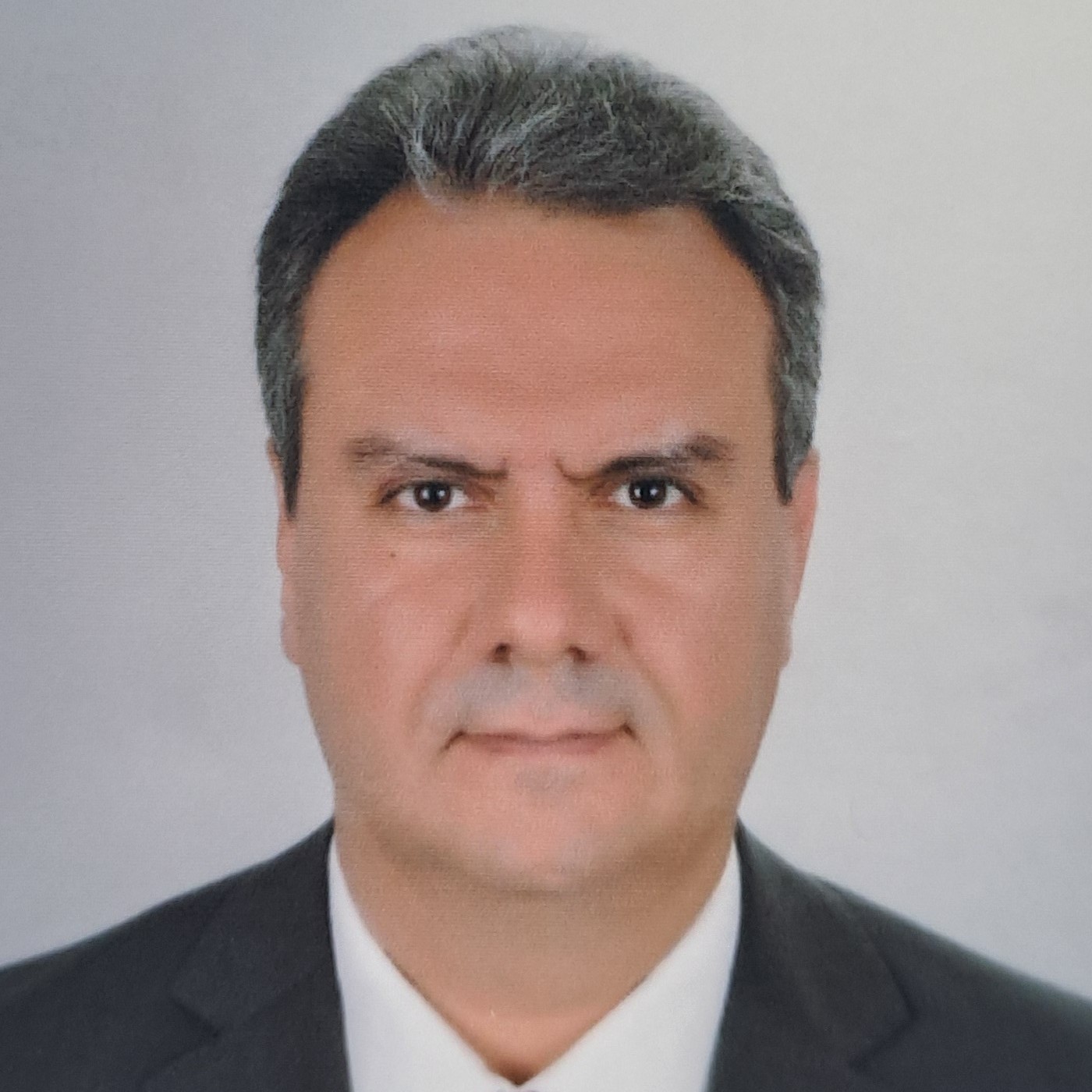
Title:Comprehensive Target Characterization Using Polarimetric Inverse Synthetic Aperture Radar: Simulation-Driven and Experimental Perspectives
Speaker: Prof. Dr. Caner Özdemir
Affiliation: Electrical-Electronics Eng. Dept, Mersin University, Mersin, TurkeyAbstract:
Inverse Synthetic Aperture Radar (ISAR) imaging has proven to be a powerful radar signal processing technique utilized for target detection, automatic target classification (ATC) and recognition (ATR) applications. In most ISAR configurations, the radar antenna is designed to transmit and receive radar signals with a defined polarization, usually linear. Since the radar cross section (RCS) of a target is polarization-dependent, the corresponding ISAR image may vary substantially with different polarization configurations of the radar system. Furthermore, different structural components on the target may exhibit sensitivity to specific polarization states while remaining insensitive to others. Consequently, certain key features of the target may not be detected under a particular ISAR polarimetric configuration. Therefore, employing multiple polarization states for the radar antenna enables the receiver to capture a broader range of target features, thereby enhancing the probability of accurate target classification and recognition. Building upon this polarization diversity, polarimetric decomposition techniques are employed to analyze and interpret the scattering mechanisms of radar signals originating from various types of targets, whether natural or man-made. These techniques enable the separation of the total radar backscattered signal into distinct physical or mathematical components, each representing a specific scattering mechanism, thereby allowing the extraction and classification of more salient target features. This work explores the distinctive features of polarimetric ISAR imaging through a combination of simulation-based analyses and experimental measurements, with the aim of emphasizing its practical relevance and applicability.
Biography:
Prof. Dr. Caner Ozdemir received the B.S.E.E. degree in 1992 from the Middle East Technical University, Ankara, Turkey, and the M.S.E. and Ph. D. degrees in Electrical & Computer Engineering from the University of Texas at Austin in 1995 and 1998, respectively. From 1992 to 1993, he worked as a project engineer at the Electronic Warfare Programs Directorate of ASELSAN Military Electronic Industries Inc., Ankara, Turkey. From 1998 to 2000, he worked as a research scientist at Electronic & Avionics Systems group of AlliedSignal Inc., Columbia, Maryland. He joined the faculty of Mersin University in 2000 and is a professor at the department of Electrical-Electronics Engineering, Mersin, Turkey. He currently serves as the research dean at Mersin University as well. He has been appointed as a consultant to the Marmara Research Center of the Scientific and Research Council (TUBITAK) of Turkey and many defense industry firms. Dr. Ozdemir’s research interests are radar image/signal processing, inverse synthetic aperture radar (ISAR), radar cross section, radar design, ground penetrating radar, through-the-wall imaging radar and antenna design. He has published more than 180 journal articles and conference/symposium papers and a patent on these subjects. Dr. Ozdemir is a recipient of URSI EMT-S Young Scientist Award in the 2004 International Symposium on Electromagnetic Theory in Pisa, Italy, recipient of a JARS best paper award for photo-optical instrumentation published in the Journal of Applied Remote Sensing in 2016, Science Award at Mersin University in 2023. He is the author of the book titled “Inverse Synthetic Aperture Radar Imaging with Matlab Algorithms”. Open> -
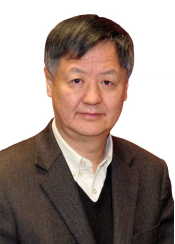
Title:The State of the Art of Neurodynamic
Speaker:Jun Wang
Affiliation: City University of Hong KongAbstract:
As an important tool for scientific research and engineering applications, optimization is omnipresent in a wide variety of settings. It is computationally challenging when optimization procedures have to be performed in real time to optimize the performance of dynamical systems. For such applications, classical optimization techniques may not be competent due to the problem dimensionality and the stringent requirement on computational time. New paradigms are needed. One very promising approach to optimization is to apply artificial neural networks. Because of the inherent nature of parallel and distributed information processing in neural networks, the convergence rate of the solution process does not decrease as the size of the problem increases. This talk will present the state of the art of neurodynamic optimization models and selected applications. Specifically, starting with the idea and motivation of neurodynamic optimization, I will review the historical review and present the state of the art of neurodynamic optimization with many individual models for convex and generalized convex optimization. In addition, I will present a multiple-time-scale neurodynamic approach to selected constrained optimization. In addition, I will introduce population-based collaborative neurodynamic approaches to constrained distributed and global optimization, by deploying a population of individual neurodynamic models with diversified initial states at a lower level coordinated by using some global search and information exchange rules based on swarm intelligence at an upper level. Finally, I will show that many constrained optimization problems in science and engineering can be solved effectively and efficiently by means of neurodynamic optimization.
Biography:
Jun Wang is a chair professor of Computational Intelligence in the Department of Computer Science and the Department of Data Science at City University of Hong Kong. Prior to this position, he held various academic positions at Dalian University of Technology, Case Western Reserve University, University of North Dakota, and the Chinese University of Hong Kong. He also held various short-term visiting positions at USAF Armstrong Laboratory, RIKEN Brain Science Institute, Dalian University of Technology, Huazhong University of Science and Technology, and Shanghai Jiao Tong University. He received a B.S. degree in electrical engineering and an M.S. degree in systems engineering from Dalian University of Technology and his Ph.D. degree in systems engineering from Case Western Reserve University. His current research interests include neural networks and their applications. He published about 350 journal papers, 15 book chapters, 11 edited books, and numerous conference papers in these areas. He is the Editor-in-Chief of the IEEE Transactions on Artificial Intelligence and was the Editor-in-Chief of the IEEE Transactions on Cybernetics. He was an organizer of several international conferences, such as the General Chair of the 13th International Conference on Neural Information Processing (2006) and the 2008 IEEE World Congress on Computational Intelligence, and a Program Chair of the IEEE International Conference on Systems, Man, and Cybernetics (2012). He is an IEEE Fellow, IAPR Fellow, CAAI Fellow, a Fellow of the Hong Kong Academy of Engineering, a foreign member of Academia Europaea, and an IEEE Systems, Man and Cybernetics Society Distinguished Lecturer (2017-2018), and was an IEEE Computational Intelligence Society Distinguished Lecturer (2010-2012, 2014-2016). In addition, he served as President of Asia Pacific Neural Network Assembly (APNNA) in 2006 and many organizations such as IEEE Fellow Committee; IEEE Computational Intelligence Society Awards Committee; IEEE Systems, Man, and Cybernetics Society Board of Governors, He is a recipient of an IEEE Transactions on Neural Networks Outstanding Paper Award and APNNA Outstanding Achievement Award in 2011, Neural Networks Pioneer Award from IEEE Computational Intelligence Society in 2014, CAAI Wu Wenjun AI Science & Technology Achievement Award in 2016, and Norbert Wiener Award from IEEE Systems, Man and Cybernetics Society in 2019, among others. Open>