
Tutorials
-
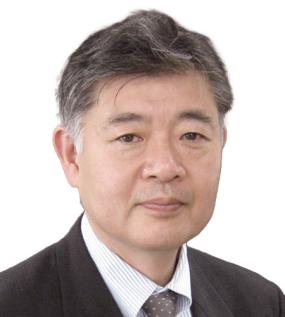
Title: Understanding Ground Penetrating Radar (GPR) profiles based on Electromagnetics
Speaker: Prof. Motoyuki Sato
Affiliation: Professor, Emeritus Tohoku UniversityAbstract:
Ground Penetrating Radar (GPR) is a useful technique for shallow geophysical exploration. GPR is currently widely used for detection of buried objects such as pipe and cables, inspection of pavement and other applications. GPR equipment is easy to operate, and GPR images can be displayed immediately after data is acquired. However, understanding the physical meanings of GPR profiles is not straightforward. GPR profiles are influenced by reflection and diffraction of electromagnetic waves from buried objects, and also by propagation in inhomogeneous soil and rock, and surrounding objects such as metal wires. Therefore, very careful interpretation is required, and the knowledge of mechanisms of electromagnetic wave behavior can be used for better signal processing for image reconstruction, i.e., Synthetic Aperture Radar processing or migration.
In this tutorial, I will explain the electromagnetic wave radiation from an antenna, which determines the waveform of GPR signal. It is also related to optimization of antenna design for GPR system. Then I will discuss on the antenna coupling to the soil and material, which is related to the optimum distance of GPR antenna on the ground surface. Then we will discuss the influence of metal objects, which are closely laid near the GPR system.
I will describe methods to determine the electric properties of material, by using GPR and other methods, which are important for image reconstruction. This technique can be used for in-situ determination of the electric constant of material.
Then, I will introduce some recent GPR survey results for archaeology and other applications.
Biography:
Motoyuki Sato received the B.E., M.E degrees, and Dr. Eng. degree in information engineering from Tohoku University, Sendai, Japan, in 1980, 1982 and 1985, respectively. Since 1997 he has been a professor at Tohoku University until his retirement in 2023, and currently he is Professor Emeritus of Tohoku University and Guest professor at Higashi Nippon International University. He is CEO of ALISys Co., Ltd, which he established in 2019
His current interests include transient electromagnetics and antennas, radar polarimetry, ground penetrating radar (GPR), borehole radar, electromagnetic induction sensing, GB-SAR and MIMO radar systems. He developed GPR sensors for humanitarian demining, and they are used in mine affected countries including Cambodia and Ukraine.
He served the technical chair of GPR1996 in Sendai and the general chair of IGARSS2011 Sendai-Vancouver. He is a life fellow of IEEE and a fellow of IEICE. Open> -
Title: Supervised Deep Learning for SAR Despekling: handling the lack of reference and evaluating the results
Speaker: Giampaolo Ferraioli
Affiliation: Department of Science and Technology, University of Naples Parthenope, Naples, Italy.Abstract:
The presentation will address methods for learning from the image formation, embedding domain knowledge explaining causalities and interpreting the objects, their signatures, and physical parameters. The new paradigm is centered on a systematic representation of the SAR imaging. Thus, the SAR data information extraction is based on the model of the physical layers in the SAR systems: i) Orbits & image formation; ii) Sensor model, iii) EM radiation-scene interaction model. The methods are applied to implement Virtual Sensing functionalities, i.e. the prediction of un-observed SAR wavelengths or polarization. The dedicated methods are beyond the complex value deep learning models. The new architectures are learning and preserving the basic SAR properties, as the coherence and the azimuth subaperture characteristics. The addressed methods cover complex valued DNN architectures for SLC SAR data classification embedding SAR signal processing. The methods are demonstrated for scene signatures prediction, addressing the interaction between the EM radiation and the Earth surface. Further a new category of physics aware generative models is introduced. Derived from autoencoders, GAN or diffusion the new models generate SAR images beyond the realistic aspects, preserving their class identity or reproducing the underlying physical models. Examples will be provided for SAR applications for monitoring the effects of climate changes.
Biography:
Mihai Datcu (Fellow, IEEE) received the M.S. and Ph.D. degrees in electronics and telecommunications from the University Politehnica of Bucharest (UPB), in 1978 and 1986, respectively, and the Habilitation a Diriger des Recherches degree in computer science from University Louis Pasteur, Strasbourg, in 1999. Since 1981, he has been with the Faculty of Electronics, Telecommunications and Information Technology, POLITEHNICA Bucharest. From 1992 to 2002, he had an Invited Professor Assignment with the Institute of Communication Technology, Swiss Federal Institute of Technology (ETH Zürich). From 1993 to 2023, he was with the German Aerospace Center (DLR), Oberpfaffafenhofen, Germany, as a Senior Scientist with the Remote Sensing Technology Institute (IMF) and a Team Leader of the Big Data and AI for Earth Observation. From 2005 to 2013, he was a Professor holder of the DLR-CNES Chair, ParisTech. From 2018 to 2020, he was the holder of the Blaise Pascal International Chair of Excellence, at Conservatoire National des Arts et Métiers (CNAM), Paris. Presently he is Visiting Professor with the ESA’s Φ-Lab. His research interests include information theory, signal processing, artificial intelligence, computational imaging, and quantum machine learning with applications in EO. He was a recipient of the Chaire d’Excellence Internationale Blaise Pascal 2017 for international recognition in the field of data science in EO, and the 2018 Ad Astra Award for Excellence in Science. In 2022, he received the IEEE GRSS David Landgrebe Award in recognition of outstanding contributions to Earth observation analysis using innovative concepts for big data analysis, image mining, machine learning, smart sensors, and quantum resources. From 2020 to 2024 he was IEEE GRSS DL. Open> -
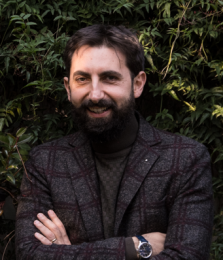
Title: Physics Aware AI for Synthetic Aperture Radar Earth Observation
Speaker: Mihai Datcu
Affiliation: DPOLITEHNICA Bucharest.Abstract:
In recent years, the SAR processing domain has been shifting from traditional model-based solutions to deep learning (DL) approaches. While the results achieved so far are impressive, many challenges remain open. A major issue shared by DL-based methods for SAR despeckling is the lack of real ground truth data to serve as a reliable reference. This limitation has two key consequences: (1) supervised training approaches lack the necessary input/reference data, and (2) it is not possible to perform fair and objective comparisons of the obtained results. This tutorial addresses both problems, focusing on the current state-of-the-art solutions as well as emerging perspectives. The goal is to stimulate open discussion on the presented results and highlight promising directions for future research.
Biography:
Giampaolo Ferraioli was born in Lagonegro, Italy, in 1982. He received the BS and MS degrees and the Ph.D. degree in Telecommunication Engineering. He has been Visiting Scientist at Département TSI of Télécom ParisTech, Paris, France. Currently, he is an Associate Professor with Università degli Studi di Napoli Parthenope. His main research interests deal with Statistical Signal and Image Processing, Radar Systems, Synthetic Aperture Radar, Image Restoration and Deep Learning. He is author of more than 150 papers published on international journals and on international conference proceedings. He won the “IEEE 2009 Best European PhD Thesis in Remote Sensing” prize, sponsored by IEEE Geoscience and Remote Sensing Society. He serves as Associate Editor of IEEE Geoscience and Remote Sensing Letters, as Associate Editor of IEEE Journal on Miniaturization for Air and Space Systems and he is in the Editorial Board of MDPI Remote Sensing. Open> -
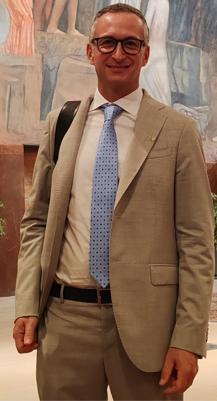
Title: An EM Perspective to SAR for Ocean Applications
Speaker: Ferdinando Nunziata
Affiliation: Sapienza University of Rome.Abstract:
Nowadays, synthetic aperture radar (SAR) represents a key tool to provide effective and continuous monitoring of the Earth's surface. The full understanding of SAR measurements relies on a physical analysis of the interaction between the microwaves and the observed scene on one side, and of the acquisition mechanism peculiar of this type of radar on the other side.
In these lectures, the main mechanism ruling the interaction between the microwaves and the observed scene, namely the scattering, is reviewed from its theoretical foundations up to the approximate solutions developed to deal with operational cases. The theoretical aspects will be accompanied by numerical simulations contrasted with actual SAR measurements.
Biography:
Ferdinando Nunziata (Senior Member, IEEE) was born in Avellino, Italy, in 1982. He received the B.Sc., M.Sc., and Ph.D. degrees in telecommunication engineering from the Università degli Studi di Napoli “Parthenope,” Napoli, Italy, in 2003, 2005, and 2008, 992 respectively. Since 2024, he has been Full Professor of applied electromagnetics with the Sapienza University of Rome, Rome, Italy. His research interests include sea surface scattering, radar polarimetry, SAR sea oil slick and metallic target monitoring, spatial resolution enhancement techniques, and GNSS-R. Open> -
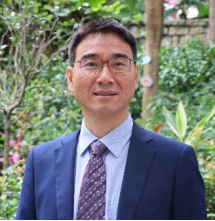
Title: Optimizing Wireless Power Transfer for IoT and Biomedical Innovations
Speaker: Prof. Yongxin Guo
Affiliation: City University of Hong Kong.Abstract:
Wireless power transfer (WPT) plays an increasingly important role in internet of things (IoTs) and biomedical applications. With the rapid development of 5G and IoTs, the dense deployment of sensor nodes and heterogeneous integration of sensor network become more and more popular. An easy access to power with the least dependence on power storage system (battery) is highly desirable. To address the power hunger of sensor nodes, WPT technology plays an important role. On the other hand, numerous applications in medical diagnostics and therapeutics ranging from cardiac pacemakers to emerging devices in visual prosthesis, brain computer interfaces and body area networks have spurred electronic engineers to propose new wireless medical devices. Wireless implantable medical devices (IMDs) provide an opportunity to improve the patient health monitoring and treatment. To facilitate the miniaturization of IMDs and to extend the lifespan without incorporating a bulky battery, the wireless power transfer (WPT) technology plays an essential role. In this presentation, various wireless power approaches used for IoTs and biomedical applications will be introduced. Our recent research progress on WPT will be presented. Examples on near-field inductive and capacitive wireless power and far-field wireless power will be given.
Biography:
Dr Yongxin Guo is currently a Chair Professor of Electronic Engineering under the Global STEM Professorship Scheme at the Department of Electrical Engineering, City University of Hong Kong. Concurrently, he is serving as Director for City University of Hong Kong Qingdao Research Institute. Dr Guo was a Professor at the Department of Electrical and Computer Engineering, National University of Singapore (NUS). He has authored or co-authored over 600 international journal and conference papers, 2 books and 4 book chapters. He holds over 70 granted/filed patents in USA, China and Singapore. His current research interests include Electromagnetics in Biomedicine, Antennas, Microwave, Millimeter-Wave and Terahertz Integrated Circuits, Wireless Power Transfer, Radar Systems, Microwaves in Quantum Computing, AI for Antennas, RF Circuits and Wireless Sensing. He has graduated 27 PhD students and hosted and supervised more than 120 research staff, visiting PhD students, and visiting scholars at NUS. Dr. Guo is a Fellow of IEEE and Singapore Academy of Engineering. He is serving as Editor-in-Chief, IEEE Journal of Electromagnetics, RF and Microwave in Medicine and Biology for two terms from 2020 to 2025. He is also serving as the Chair for IEEE MTT-S Inter-Society Distinguished Lecturer Program. He was a Distinguished Lecturer for IEEE Antennas and Propagation Society (2022-2024). He received the CityU HK 1st EE Outstanding Alumni Award in 2022. He was the recipient of 2020 IEEE Microwave and Wireless Components Letters Tatsuo Itoh Prize of the IEEE Microwave Theory and Techniques Society. He is serving as IEEE Biomedical Engineering Award Committee (2023-2025) and served as the IEEE Fellow Evaluation Committee for IEEE Engineering in Medicine and Biology Society (2019-2020). Dr Guo was the Chair for IEEE AP-S Technical Committee on Antenna Measurement in 2018-2020. He has served as General Chair/Co-Chair for a number of international conferences/workshops, including the ACES-China 2026 to be held in Qingdao. Open>